
Key Takeaways
- Platelet-rich plasma (PRP) therapy uses a concentrated portion of your own blood to support healing in painful joints and tendons.
- A PRP injection is made by drawing your blood, spinning it in a machine to concentrate the platelets, and injecting it into the problem area.
- PRP has shown the most promise for mild to moderate knee osteoarthritis and certain long-lasting tendon injuries, such as tennis elbow.
- Results build slowly over several weeks, and PRP does not work the same way for everyone.
- Epic Medical is a trusted Pittsburgh sports medicine and family medicine practice that offers PRP injections for joint pain, so request an appointment online with Epic Medical to see if PRP is right for you.
What Is Platelet-Rich Plasma, and Where Does It Come From?
Your blood is made mostly of a liquid called plasma. It also carries small parts called platelets. Platelets are best known for helping blood clot, but they also hold proteins called growth factors. These growth factors play a key role in healing.
PRP is plasma with far more platelets than usual. The American Academy of Orthopaedic Surgeons (AAOS) explains that PRP can have 5 to 10 times more platelets than normal blood. Because PRP comes from your own body, it avoids the problems that can come with donor blood.
How PRP Is Prepared and Injected, Step by Step
Cleveland Clinic describes getting a PRP injection as a simple three-step process that happens during one office visit. Here is what each stage looks like.
Before Your Injection
Your provider will review your health history to make sure PRP is safe for you. You may be asked to stop certain medicines for a short time, such as blood thinners or NSAIDs (nonsteroidal anti-inflammatory drugs, like ibuprofen). People with certain blood conditions may not be good candidates.
During Your Visit
- Blood draw: Your provider takes one or more small vials of your blood.
- Spinning the sample: Your blood goes into a centrifuge, a machine that spins fast to separate blood parts by weight. This concentrates the platelets.
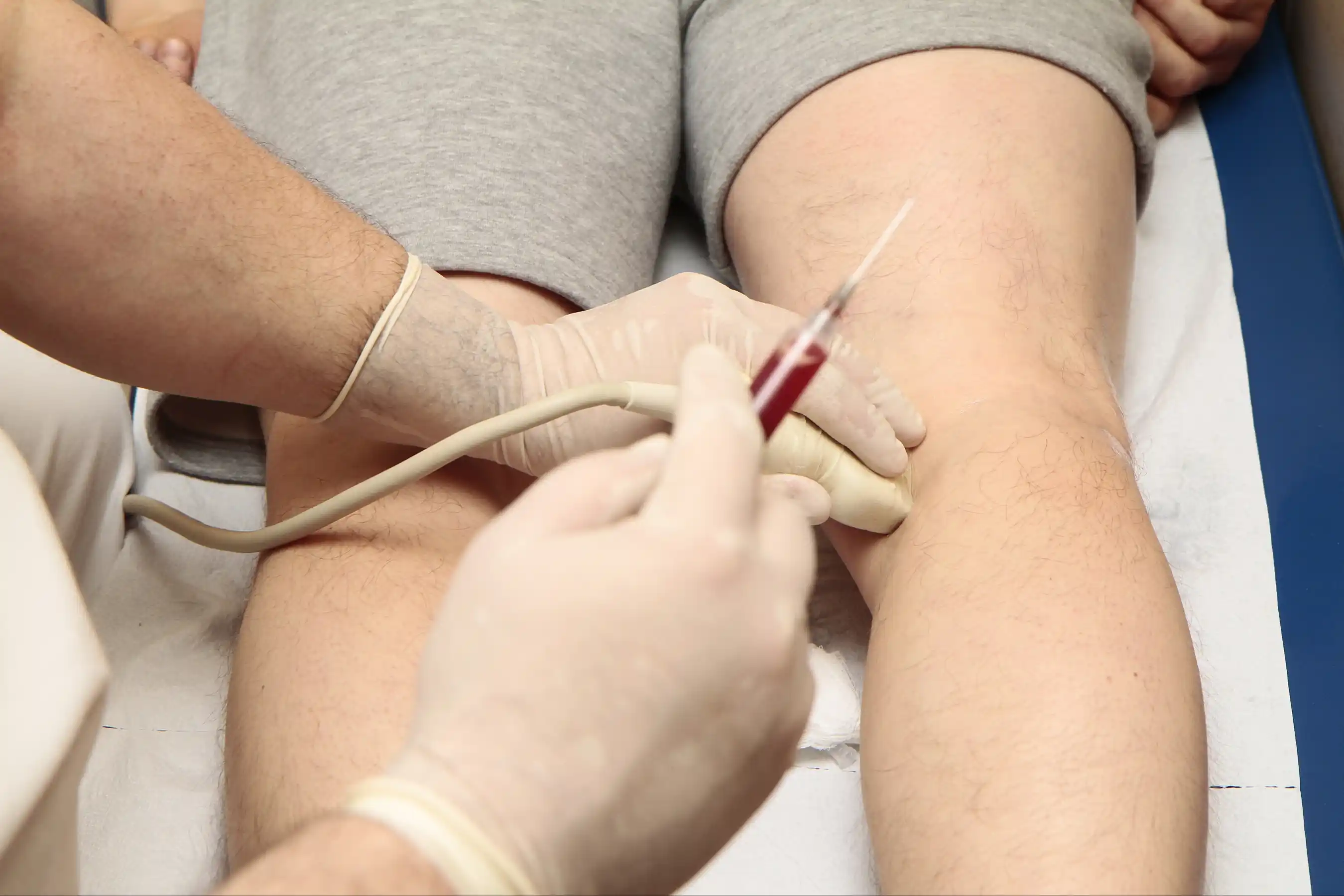
- Injection: Your provider injects the PRP into the painful area. They may use ultrasound imaging to guide the needle and may add numbing medicine.
For a joint or injury, the whole visit takes about an hour.
After Your Injection
It is normal to have some swelling and soreness for a day or two. This happens because PRP starts a healing response in the area.
PRP Recovery Timeline at a Glance
| Stage | What Usually Happens | Typical Timing |
|---|---|---|
| Injection visit | Blood draw, spinning, and injection | About 1 hour |
| Early recovery | Swelling and soreness at the injection site | 1 to 2 days |
| First results | Early pain relief may begin | A few weeks |
| Ongoing healing | Tissue continues to heal and improve | Several months |
| Lasting effects | Benefits may continue, depending on your condition | 6 months to a year or longer |
Some people need more than one PRP treatment to get the results they want.
Which Joint Pain Conditions May PRP Be Considered For?
Research on PRP is still growing. According to AAOS, the strongest support so far is for:
- Mild to moderate knee osteoarthritis: Osteoarthritis is wear-and-tear arthritis. Some studies show PRP results lasting up to two years.
- Chronic tendon injuries: PRP appears effective for tennis elbow, a common injury to the tendons on the outside of the elbow. Results for other tendon problems, like Achilles tendinitis, look promising but are less certain.
AAOS also notes that PRP has shown little or no benefit for some uses, such as healing broken bones. That is why a careful exam matters before deciding on PRP injections for joint pain.
How PRP Differs From Other Injection-Based Treatments?
Epic Medical offers several kinds of joint injections. Each one works differently:
- PRP injections use your own platelets to support healing over time.
- Corticosteroid injections use medicine to calm inflammation (swelling and irritation). Learn more about how cortisone shots relieve joint pain and inflammation from Cleveland Clinic.
- Viscosupplementation adds a lubricating fluid to the joint to help it move more smoothly.
Cleveland Clinic notes that providers often use PRP as an add-on to other care, not as the only treatment. Some providers combine PRP with cortisone or lubricating gel shots.
Questions to Ask Before Considering PRP
Bring these questions to your appointment to help you make a confident choice:
- Is my joint pain caused by a condition that PRP is known to help?
- What other joint pain treatment options should I try first or combine with PRP?
- How many PRP injections might I need?
- Do I need to stop any medicines before my injection?
- What will PRP cost, and will my insurance cover any of it? AAOS notes that few insurance plans pay for PRP, so it is smart to review Epic Medical's list of accepted insurance plans and check with your carrier.
- How will we track whether the treatment is working?
Find Out If PRP Therapy Fits Your Joint Pain Plan at Epic Medical
PRP therapy uses your body's own healing tools to ease joint pain, and it works best when it is part of a plan made just for you. Epic Medical's Pittsburgh team can help you decide whether PRP or another option makes the most sense.
Request an appointment online with Epic Medical to talk about PRP injections through Epic Medical's sports medicine program.
Frequently Asked Questions
What is a platelet-rich plasma injection?
A platelet-rich plasma injection is a shot made from your own blood. Your blood is spun in a machine to concentrate the platelets, which contain healing growth factors. The PRP is then injected into an injured or painful area.
Does a PRP injection hurt?
You may feel some discomfort during the injection, and your provider may use numbing medicine. Swelling and soreness for a day or two afterward are common and expected.
How long does it take for PRP to work for joint pain?
Most people need a few weeks to notice early relief. Full healing can take several months, and effects may last six months to a year or longer.
Where can I find a PRP injection near me?
If you live in or near Pittsburgh, Epic Medical offers PRP injections through its sports medicine program. You can request an appointment online to find out if you are a good candidate.
Is PRP therapy in Pittsburgh, PA, right for everyone?
No. PRP results vary, and it is not a good fit for everyone, including some people with certain blood conditions. An Epic Medical provider can review your health history and help you choose the best joint pain treatment.
