
Key Takeaways
- Sitting for long stretches flattens the natural curve of the lower spine and puts extra pressure on spinal discs, which is a leading cause of desk-related back pain.
- Common posture mistakes, like slouching or leaning toward a screen, add unnecessary strain to the lower back over the course of a workday.
- Small ergonomic adjustments to a chair, desk, and monitor can significantly reduce daily back strain.
- Regular stretching and movement breaks help counteract the effects of prolonged sitting.
- Back pain that lingers, worsens, or spreads despite these changes should be evaluated by a professional.
- Epic Medical's physical therapy and sports medicine team in Fox Chapel helps Pittsburgh-area office workers relieve sitting-related back pain and build habits that prevent it from coming back, and patients can request an appointment to get started.
How Prolonged Sitting Affects the Lower Back
Sitting puts more pressure on the lower spine than standing does. Over the course of an eight-hour workday, that added pressure adds up. The spine relies on movement to stay healthy, and a chair simply doesn't provide much of it.
According to Mayo Clinic's office ergonomics guide, sitting at a desk for long periods without proper setup may contribute to neck and back pain, along with sore wrists and shoulders. The lower back muscles work overtime to support a seated position, especially when posture slips as the day goes on.
Office workers throughout the Pittsburgh area often notice this pain building gradually rather than appearing all at once. It may start as mild stiffness after a long meeting and progress to a dull, persistent ache by the end of the week.
Common Posture Mistakes in Office Settings
Most desk-related back pain traces back to a handful of repeated habits:
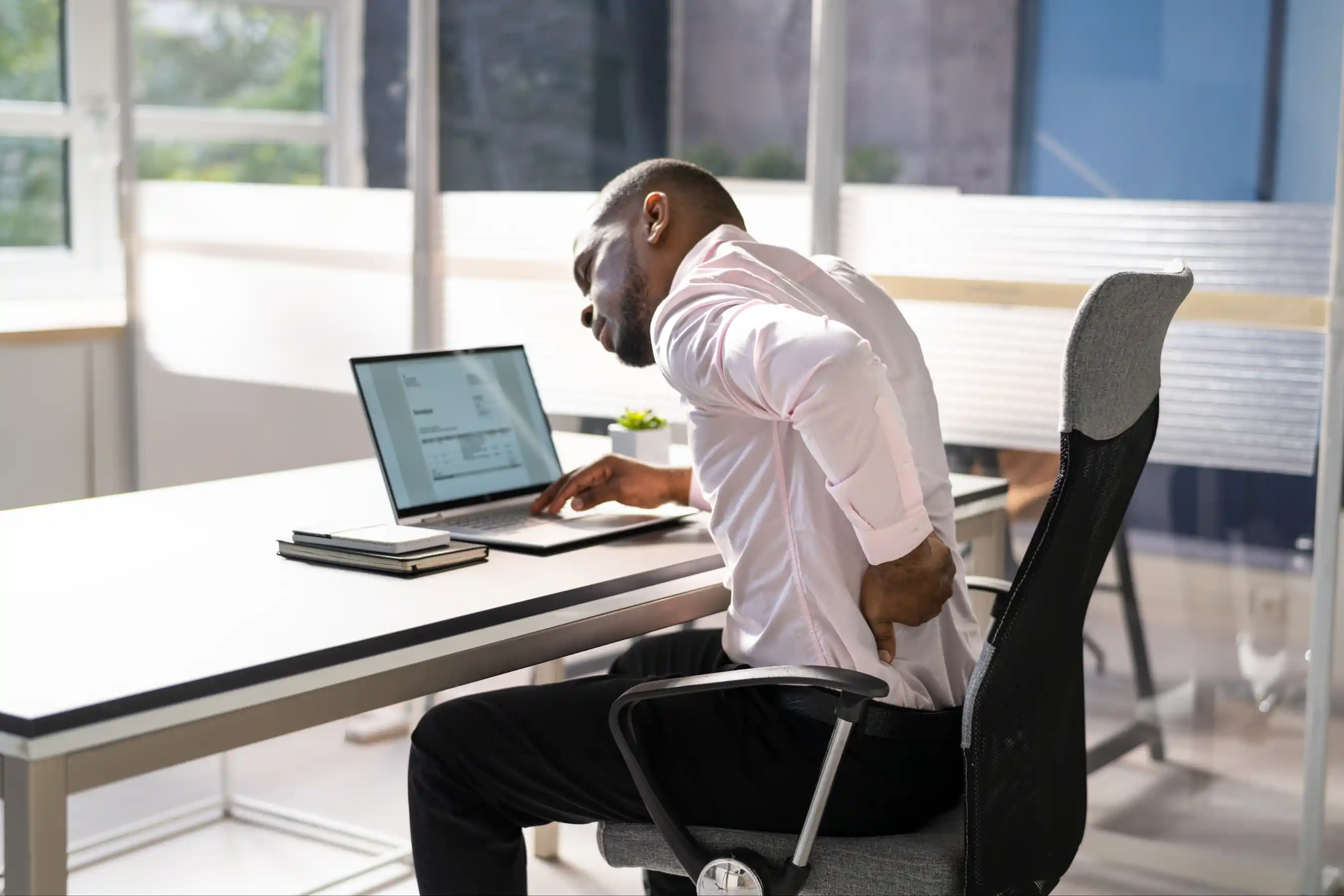
- Slouching or rounding the lower back instead of maintaining its natural curve.
- Leaning forward toward the monitor, which shifts weight off the sit bones and onto the spine.
- Crossing legs for long periods, which can tilt the pelvis and add uneven pressure to the lower back.
- Sitting too far from the desk, encouraging a forward-reaching posture.
- Skipping lumbar support, leaving the lower back unsupported for hours at a time.
None of these habits cause damage overnight, but repeated daily strain can turn into chronic discomfort.
Ergonomic Adjustments That May Help
A properly set up workstation can go a long way toward easing back strain, and it pairs well with the hands-on treatment options available through Epic Medical's physical therapy program. Cleveland Clinic's guidance on home and office ergonomics recommends keeping the spine and head in a neutral position and positioning the computer screen so the eyes naturally land on the most-used area of the display.
A few adjustments worth making:
| Workstation Element | What to Adjust | Why It Matters |
|---|---|---|
| Chair height | Feet flat on the floor, knees level with hips | Keeps pelvis in a neutral position |
| Lumbar support | Small cushion or built-in support at the small of the back | Preserves the spine's natural curve |
| Monitor height | Top of screen at eye level | Reduces forward head and neck strain |
| Keyboard position | Elbows bent at roughly 90 degrees | Prevents reaching that pulls on the lower back |
| Desk clearance | No boxes or equipment under the desk | Allows for natural leg and foot positioning |
Stretching and Movement Recommendations
Even a well-adjusted chair can't replace movement. Standing up every 30 to 45 minutes, taking a short walk, or doing a few gentle stretches can relieve pressure on the lower back before it builds into pain. Simple hip flexor stretches, seated spinal twists, and standing back extensions are all easy to fit into a workday and don't require any equipment.
When Persistent Pain Should Be Evaluated
Most sitting-related back pain improves with better ergonomics and more frequent movement. However, pain that lasts longer than a few weeks, worsens despite these changes, or spreads into the hips or legs is worth having checked out. A physical therapist near you can identify the specific movement patterns or muscle imbalances contributing to the pain and build a plan to correct them.
Find Lasting Relief From Desk-Related Back Pain at Epic Medical
Sitting all day doesn't have to mean living with back pain. Epic Medical's physical therapy team can pinpoint what's driving your discomfort and build a plan that fits your workday, not just your gym schedule.
If low back pain has been slowing you down at your desk, schedule an appointment for physical therapy at Epic Medical and start finding relief that lasts.
Frequently Asked Questions
Why does sitting all day cause lower back pain?
Sitting puts more pressure on the discs in the lower spine than standing does, and it flattens the spine's natural curve. Combined with common posture habits like slouching, this added pressure can lead to stiffness and pain over time.
What is the best sitting position to avoid back pain?
Feet flat on the floor, knees level with the hips, and the lower back supported by the chair or a small cushion. The goal is to preserve the spine's natural curve rather than letting it round forward.
How often should I get up from my desk to prevent back pain?
Standing or moving every 30 to 45 minutes can help relieve pressure on the lower back before it builds into pain, even if it's just a short walk to refill a water bottle.
When should I see a physical therapist for back pain from sitting?
If pain lasts more than a few weeks, doesn't improve with ergonomic changes, or spreads into the hips or legs, it's a good time to have it evaluated by a physical therapist near you.
